


2010-03-06

2010-02-12
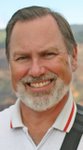
Walter Frederick Morrison (January 23, 1920 – February 9, 2010)

On June 17, 1957, Wham-O Inc. changed the name of the Pluto Platter to Frisbee, which disturbed Walter “Fred” Morrison, the inventor of the world-famous disc, who thought the new sobriquet would never fly.
“I thought Frisbee was a terrible name,” Morrison, now 87, said. “I thought it was insane.”
On Tuesday, February 10th, in Monroe, Utah, Morrison died at the age of 90.
Utah House Rep. Kay McIff, an attorney who represented Morrison in a royalties case, says Morrison died at his home. McIff is from Richfield, Morrison’s original hometown.
“That simple little toy has permeated every continent in every country, as many homes have Frisbees as any other device ever invented,” McIff said. “How would you get through your youth without learning to throw a Frisbee?”
Morrison’s son, Walt, relayed to The Associated Press Thursday that “old age caught up” with his father and that he also had cancer.
“He was a nice guy. He helped a lot of people,” Walt Morrison said. “He was an entrepreneur. He was always looking for something to do.”
Morrison sold the rights to his “Pluto Platter” in 1957 to the Wham-O corporation. The plastic flying disc was later renamed the “Frisbee,” with sales surpassing 200 million discs. It is now a staple at beaches and college campuses across the country and spawned sports like Frisbee golf and the team sport Ultimate.
An official disc golf course at Creekside Park in the Salt Lake City suburb of Holladay is named for Morrison.
In 2001, Morrison co-wrote a book with Frisbee enthusiast and historian Phil Kennedy.
According to Kennedy, Morrison used to toss a tin cake pan on the beach in California with his future wife, Lu,. The idea evloved as Morrison considered ways to make the cake pans fly better. After serving as a pilot in World War II, Morrison began manufacturing his flying discs in 1948.
He would hawk the discs at local fairs and eventually attracted Wham-O Manufacturing.
Kennedy says Wham-O adopted the name “Frisbee” because that’s what college students in New England were calling the Pluto Platters. The name came from the Frisbie Pie Co., a local bakery whose empty tins were tossed like the soon-to-be named Frisbee.
Walt Morrison said his father is survived by three children. The family is planning a service for Morrison’s friends and relatives Saturday at the Cowboy Corral in Elsinore.
Fame and fortune from a flip
Breaking sports news video. MLB, NFL, NBA, NHL highlights and more.
2010-01-10
"Alley Oppsy Daisy!” It’s the 50th Anniversary of Rocky the Flying Squirrel and Bullwinkle J. Moose, Pt. 4

"Alley Oppsy Daisy!”
It’s the
50th Anniversary of Rocky the
Flying Squirrel and
Bullwinkle J. Moose, Pt. 4
By
Shane Shellenbarger
As you'll recall from last time, our intrepid band of animators, writers, and voice actors were experiencing troubles South of the Border. The product coming from the Mexican animation studio, Val-Mar, did not match the quality of the pilot produced in the U.S. of A. The behind-the-scenes politics and Machiavellian machinations are explored in great detail in Keith Scott's book, "The Moose That Roared." Suffice it to say, Jay Ward had a major problem and neither enough time nor money to fix it properly. The show, which Jay Ward and Bill Scott had originally believed would be a daily five minute program, had been contracted between P.A.T. and General Mills as fifty-two half hour shows. Financially, this meant that each half-hour show would be produced for $8,520 at a time when the average one minute TV commercial cost between eight and nine thousand dollars. In addition, Ward and Scott would have to co-produce the series in its entirety for no added money (save for percentages of the show elements) while deferring their own salaries until show delivery.
Meanwhile, things were moving at a lighting pace in the Los Angeles studio. In deference to his health problems, Ward curtailed his commute from Berkeley and took a combination office/apartment on the cusp of West Hollywood. The writing staff was beefed up by bringing Chris Jenkyns, George Atkins, Chris Hayward, Skip Craig, and Lloyd Turner. Layout animators David Hanan and Bernie Gruver came on board. Alex Anderson contributing two scripts, Ted Parmelee signed on as a freelance animation director, with Al Shean filling out the art department. It was the summer of 1959 and events were about to go from hectic to a grinding halt.
After pricing the film stock, approving the finished theme music, and commencing the animation of the show titles, Ward invoiced the bills back east to P.A.T. Two sets of payments were delayed and the director, Parmelee, refused to go to Mexico. The writers were concerned and their writing suffered. Ward feared that his reputation would be ruined. Bill Scott sent word that a recording session had been canceled and that writing and storyboards were not moving forward. In essence, all work had stopped. Four weeks went by without funds coming from P.A.T. Ward and Scott threatened breach of contract. Eventually it came to light that P.A.T., the company financing Rocky and His Friends, had no money. P.A.T. had planned to borrow against the General Mills contract, but Manufacturers Hanover (P.A.T.'s bank) would not approve the loan due to the Mexican production link. Len Key attempted an end run play. He signed a performance bond with American Surety (a AAA insurance Carrier) guarantying completion and delivery of the show. He took that and the General Mills contract to Citicorp in Mexico, presented them to the Citicorp manager and asked for a loan. The manager, who was an American, declined the loan, stating that his bank didn't deal with gringos because gringos don't win in Mexican courts, which meant that if the Mexican studio defaulted Ward Productions couldn't collect.
General Mills began to panic. They wanted Rocky and His Friends so that they could compete with Kellogg's sponsorship of Huckleberry Hound. Finally, Gordon Johnson talked the ad agency, D-F-S, into guaranteeing a $125,000 loan from the Chemical Corn Exchange Bank. Johnson and a friend, Robert Travis, purchased 60 percent of the stock in P.A.T., with the entirety of the stock pledged to the ad agency pending repayment of the loan. By July 10th, Dancer-Fitzgerald-Sample had paid off all outstanding debt. This meant that the ad agency was the de facto executive producer of the show. Eventually, the Rocky group was able to discharge the loan six weeks early.
Based on these experiences, Jay Ward didn't want to keep his financial future exclusively in the Rocky and His Friends basket. He began to push for a second TV show. Ward still believed that a puppet show could work, but there seemed to be little interest in the industry. NBC showed some curiosity in a Ward produced Winnie the Pooh pilot, but nothing came of it. For the time being at least, Ward was shackled to Rocky and His Friends.
Around August 1959, the Mexican unit announced they were ready to start. Ward and Scott had their doubts, but were encouraged when they were able to secure the talents of award-winning UPA designer/director Bill Hurtz. For Ward and Scott, this was the first positive note since the deal had been struck. Hurtz job was oversee the work of the Mexican animators, judging the work on a daily basis, while keeping an eye on the budget and critical dates. Ward gave Hurtz the authority to reject any work he deemed below standard. In the meantime, the ad agency D-F-S was pushing for a twice weekly airing by September 29th, 1959. Armed with Jay Ward's guidelines and mindful of the pressure from the ad agency, Hurtz arrived in Mexico on July 20th to find that things weren't as ready as they had been stated. Val-Mar had no telephone, no English-speaking stenographer, the magnetic film from Los Angeles was being held up in customs, and the layout department was wholly inadequate. Soon, Jim Hiltz and Gerald Baldwin (who had traveled with Hurtz) found themselves pressed into double duty, redrawing layouts as well as directing the cartoons.
The budget again reared its ugly head. Hanna-Barbera (H-B) was producing its half-hour shows for $21,000 per episode, nearly three times the Rocky budget. Ward reasoned that their shows should have been budgeted above H-B's, since Rocky had more dialogue, movement, scene changes, and more voice actors. In 2009, a 30-second advertisement aired during The Simpsons costs over $200,000 dollars. Val-Mar was falling behind schedule and Ward knew that the September 29th air date was merely a pipe dream.
Come back next time for part 5 entitled, "Gringos Are Mucho Loco Or Take Back What You Said About José Doroteo Arango Arámbula."
For more info go to : http://tinyurl.com/Shane-Info-Blog
2009-12-22
Waving Goodbye To 2009
Here is a video created by Whirled Interactive giving 2009 a Google Wave sendoff.
Subscribe to:
Posts (Atom)

